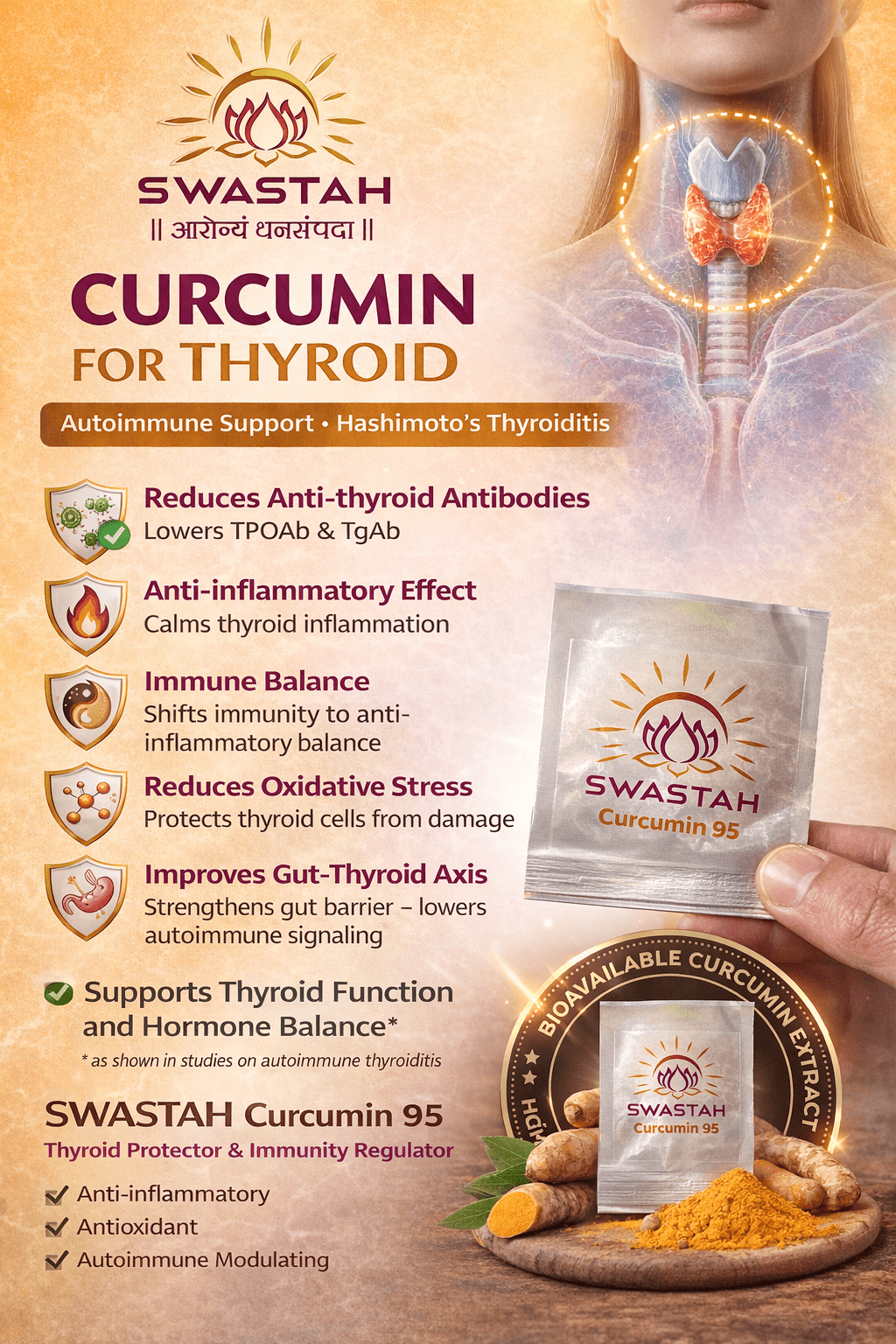
 Curcumin affects the thyroid indirectly through inflammation control, autoimmune modulation, and oxidative protectionrather than acting like a hormone or stimulating thyroid directly.
Its role is most relevant in:
• Hashimoto’s thyroiditis
• subclinical hypothyroidism
• thyroid inflammation
• metabolic thyroid dysfunction
Less relevant in:
• severe iodine deficiency
• structural gland failure
Mechanisms: how curcumin influences thyroid biology
1) Autoimmune modulation (most important)
Hashimoto’s is driven by:
• T-cell activation
• macrophage inflammation
• antibodies (TPOAb, TgAb)
Curcumin:
• suppresses NF-κB
• reduces Th1 & Th17 activity
• lowers cytokines (IL-6, TNF-α)
• shifts immune balance toward T-regulatory cells
Result:
• reduced autoimmune attack on thyroid tissue
2) Antioxidant protection of thyroid cells
Thyroid hormone synthesis naturally produces hydrogen peroxide (H₂O₂), which can damage tissue if uncontrolled.
Curcumin:
• activates Nrf2
• increases glutathione
• reduces ROS damage
Helps:
• protect thyroid follicles
• prevent progressive gland destruction
3) Reduces thyroid inflammation
In thyroiditis:
• macrophage infiltration occurs
• cytokines damage tissue
Curcumin:
• inhibits COX-2
• reduces prostaglandins
• decreases inflammatory infiltration
4) Gut–thyroid axis support
Autoimmune thyroid disease strongly correlates with gut permeability.
Curcumin:
• improves gut barrier integrity
• reduces endotoxin signaling (TLR4)
• lowers systemic immune activation
This indirectly stabilizes thyroid autoimmunity.
5) Metabolic thyroid signaling
Curcumin activates:
• AMPK
• insulin sensitivity pathways
Which helps:
• weight regulation
• fatigue
• metabolic slowing seen in hypothyroidism
Evidence pattern by thyroid condition
Hashimoto’s thyroiditis
Most benefit seen here.
Effects observed in studies:
• ↓ anti-TPO antibodies
• ↓ inflammatory cytokines
• improved gland preservation (supportive therapy)
Not a replacement for levothyroxine.
Subclinical hypothyroidism
• reduce inflammation
• improve TSH normalization trend
• support metabolism
Hyperthyroidism / Graves
Limited direct effect.
• oxidative stress reduction
• adjunct support
What curcumin does NOT do
• does not increase T3/T4 directly
• does not replace thyroid hormone therapy
• does not fix iodine deficiency
• does not reverse severe gland atrophy
It works upstream:
immune + inflammation + oxidative stress.
Where it fits clinically
Think of layers:
Foundation
• iodine, selenium, zinc
• thyroid hormone if needed
Disease modulation
• curcumin
• omega-3
• vitamin D
Acute autoimmune flare
• medical therapy
Curcumin sits in the disease-modifying layer.
Important biochemical connections
Curcumin influences:
• NF-κB → autoimmune attack
• Nrf2 → thyroid oxidative protection
• STAT3 → cytokine signaling
• T-cell balance → antibody production
These pathways drive Hashimoto’s progression.
Bottom line
Curcumin supports thyroid by:
• calming autoimmune attack
• protecting gland from oxidative damage
• reducing inflammatory destruction
• improving metabolic environment
It is not a thyroid stimulant — it is a thyroid protector and immune regulator.