
Curcumin As Functional Food For Osteoporosis
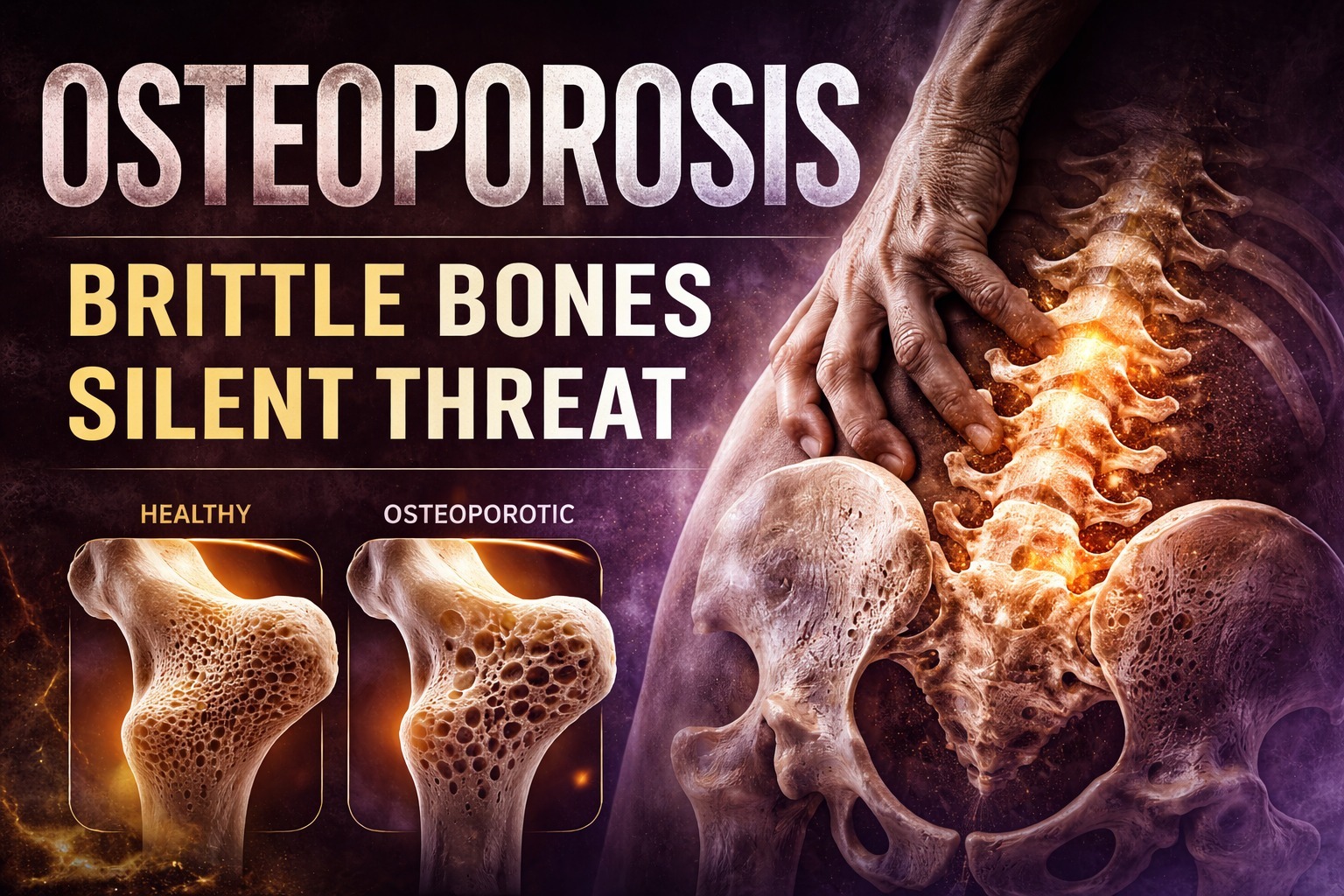
Osteoporosis is a condition where bones become weak, porous, and more likely to fracture. It often develops slowly and silently, which is why many people only discover it after a fall or injury.
Understanding How Bone Works
Your bones are not static. They are constantly being renewed through a process called bone remodelling.
Two main types of cells control this process:
- Osteoblasts – these cells build new bone
- Osteoclasts – these cells break down old bone
In a healthy body, these two processes are balanced.
But in osteoporosis:
- Bone breakdown becomes faster
- Bone formation slows down
Over time, bones lose density and strength.
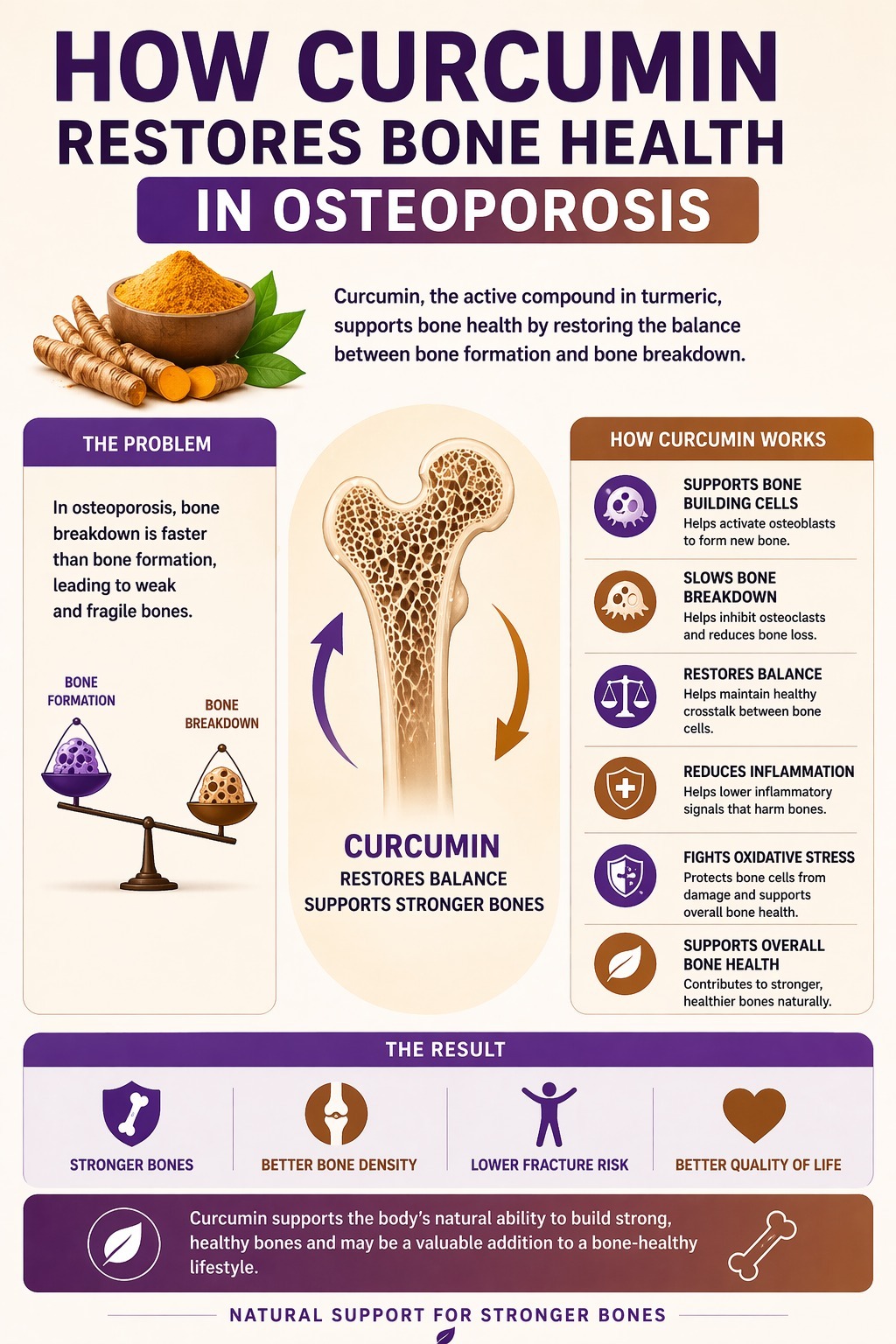
At its core, osteoporosis is not just about “low calcium” or aging. It is about a loss of rhythm inside the body with respect to bone—specifically, the balance between building new bone and breaking down old bone.
Osteoporosis is characterized by reduced bone mass and deterioration of bone microarchitecture, leading to increased fracture risk. The condition arises primarily from an imbalance in bone remodelling, where bone resorption by osteoclasts exceeds bone formation by osteoblasts.
Curcumin, a bioactive polyphenol derived from turmeric (haldi), has been studied for its potential role as a functional food component in modulating bone metabolism.
Where Curcumin Comes In
Curcumin has been widely studied for its effects on inflammation, oxidative stress, and cellular health.
What makes curcumin interesting for osteoporosis is that it doesn’t act on just one part of the system—it may influence multiple processes involved in bone health.
1. Supporting Bone-Building Cells (Osteoblasts)
One of the key problems in osteoporosis is reduced activity of osteoblasts—the cells that create new bone.
Curcumin helps by:
- Supporting the activation of these bone-building cells
- Improving their ability to form new bone tissue
This means the body may regain some of its natural ability to rebuild bone.
Looking at the signalling pathways, Curcumin supports osteoblastogenesis via:
- Activation of Runx2 (Runt-related transcription factor 2)
- Upregulation of osteocalcin and alkaline phosphatase (ALP)
👉 Result: Enhanced bone matrix formation
Modulation of Wnt/β-Catenin Pathway
- Curcumin may stimulate the Wnt/β-catenin signaling pathway
- This pathway is critical for osteoblast proliferation and differentiation
👉 Effect: Restores impaired bone formation signaling
Anti-Apoptotic Effects on Osteoblasts
- Reduces oxidative stress–induced cell death
- Supports mitochondrial function
👉 Outcome: Improved osteoblast survival
2. Slowing Down Bone Breakdown (Osteoclasts)
At the same time, osteoporosis involves overactive osteoclasts, which break down bone faster than normal.
Curcumin helps:
- Reduce the signals that activate these cells
- Slow down excessive bone resorption
This helps prevent further loss of bone density.
Inhibition of Osteoclast Activity
2.1 RANK/RANKL/OPG Pathway Regulation
This is the central axis of bone resorption:
- RANKL → stimulates osteoclast formation
- OPG (osteoprotegerin) → inhibits RANKL
Curcumin:
- ↓ RANKL expression
- ↑ OPG production
👉 Net effect: Suppression of osteoclastogenesis
2.2 NF-κB Pathway Suppression
- NF-κB drives inflammation and osteoclast differentiation
- Curcumin inhibits NF-κB activation
👉 Result: Reduced bone resorption and inflammation-driven damage
3. Restoring Balance Between Bone Formation and Breakdown
The real issue in osteoporosis is not just weak bones—it is the imbalance between formation and breakdown.
Curcumin may help restore this balance by:
- Supporting osteoblast activity
- Reducing osteoclast overactivity
Curcumin helps restore balance by:
- Normalizing RANKL/OPG ratio
- Enhancing osteoblast signaling dominance
- Reducing inflammatory cytokines (TNF-α, IL-1, IL-6)
👉 This shifts the system from:
Bone loss → toward bone maintenance
Curcumin thus creates a more stable environment for bone maintenance.
4. Reducing Inflammation
Chronic low-grade inflammation is now understood to play a major role in many long-term conditions, including osteoporosis.
Inflammation can:
- Increase bone breakdown
- Interfere with bone formation
Curcumin is known for its anti-inflammatory properties and may help:
- Reduce inflammatory signals in the body
- Create a more supportive environment for bone health
5. Protecting Bone Cells from Oxidative Stress
Another hidden factor in bone loss is oxidative stress.
This occurs when harmful molecules (free radicals) damage cells, including:
- Osteoblasts (bone builders)
- Bone tissue itself
Curcumin has antioxidant properties, which may:
- Help neutralize these harmful molecules
- Protect bone-forming cells from damage
6. A Broader View: It’s Not Just One Pathway
One of the most important things to understand is that curcumin does not act like a drug targeting a single pathway.
Instead, it works across multiple systems:
- Cellular signalling
- Inflammation
- Oxidative balance
- Bone cell communication
This makes it more of a supportive, system-level approach.
Final Thought
Osteoporosis develops over years, and improving bone health also takes time.
Curcumin may support this process by:
- Helping the body build bone more effectively
- Slowing down excessive bone loss
- Reducing inflammation and cellular stress
It therefore works by supporting the body’s natural rhythm.
Short Summary
- Osteoporosis = imbalance between bone formation and breakdown
- Curcumin:
- Support bone-building cells
- Slow bone breakdown
- Reduce inflammation
- Protect against oxidative stress