
Curcumin As Functional Food for Herpes
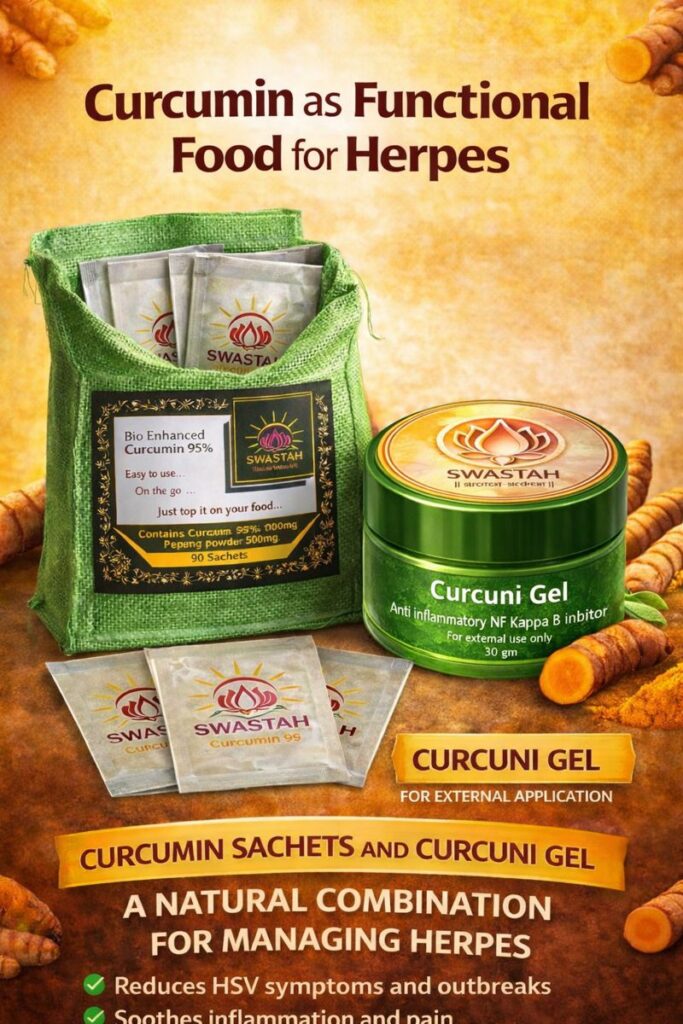
Research indicates that curcumin, the active compound in turmeric, has potential as an anti-herpetic agent, though evidence is primarily from laboratory and animal studies rather than human clinical trials.
Antiviral Effects
● Viral Inhibition: In lab settings, curcumin has been shown to reduce the infectivity and replication of both Herpes Simplex Virus Type 1 (HSV-1) and Type 2 (HSV-2). It appears to interfere with the virus’s ability to enter cells and express the genes required for its life cycle.
● Mechanism of Action: Studies suggest curcumin may block the adsorption (attachment) of the virus to host cells. It also impacts the VP16 transactivator protein, which is essential for initiating viral infection.
● Thymidine Kinase Targeting: Curcumin may bind to and inhibit HSV-1 thymidine kinase, an enzyme critical for viral DNA synthesis.
Anti-Inflammatory Benefits
● Symptom Reduction: Curcumin is a potent anti-inflammatory that can reduce the production of pro-inflammatory cytokines like IL-6 and TNF-α.
● Topical Application: Research in animal models indicates that topical or intravaginal delivery of curcumin (especially in nanoparticle or solubilized forms) can reduce tissue inflammation and pathology associated with HSV-2.
● Outbreak Management: By reducing inflammation, curcumin may help manage the severity of outbreaks and potentially lower the risk of transmitting other infections, such as HIV, which can be facilitated by herpes-related inflammation.